| 11446 Views |983 Likes
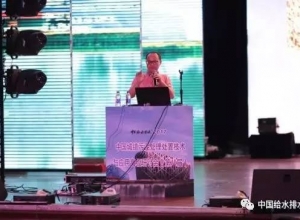
The next report is titled "Integrated Sludge Carbonization Technology and Resource Recycling." Let's welcome Mr. Jiang Liangjun, General Manager of Hunan Dingjiu Energy & Environment Technology Co., Ltd.
Jiang Liangjun: Dear experts, colleagues, and friends, good afternoon! I am from Hunan Dingjiu Energy & Environment Technology Co., Ltd. Today I would like to share with you some of our work in the field of sludge carbonization. As you know, China produces 5 billion tons of solid waste annually, including sludge, garbage, straw, kitchen waste, etc. These are all targets for our treatment. So how do we handle them? We follow the principle of learning from nature. The black soil in Northeast China was formed over tens of thousands of years through the natural carbonization of dead plants and animals. This morning, Professor Wang Kaijun mentioned the black soil of the Amazon. Its basin has 12% black soil, but it is man-made, not natural. Its black soil was formed by indigenous people who applied biochar made from smoldering plants and animals to the soil. It is artificial. The productivity of land with such man-made biochar is one to two hundred times greater than land without biochar improvement, because biochar is porous. Not only does it contain nutrients, but its porous structure can serve as a carrier for various microorganisms. If farmland is degraded, applying biochar for soil remediation is the fundamental way to restore the land. Our work is to convert organic solid waste into biochar through modern technology.
Sludge is characterized by high moisture, easy putrefaction, high phosphorus, and high nitrogen. The "four modernizations" goal of sludge treatment is still primarily reduction, with resource utilization being the direction we strive for. Sludge treatment and disposal methods are constantly evolving, and sludge carbonization is currently a hot topic in our industry. Sludge carbonization, also known as dry distillation, involves heating organic matter in sludge to decompose into carbon, oil, and gas at temperatures between 500-900 degrees Celsius in an oxygen-free environment. The process is very clean, with heavy metals and dioxins brought under control. Our core technology is our independently developed integrated continuous carbonization furnace, characterized by modularity: it is modular and can be arbitrarily combined, with each module having different working parameters and functions; controllability: the residence time and flow direction of materials in each module are controllable, and temperature is controllable; continuity: materials move continuously in a controlled and efficient manner between modules; flexibility: multiple heating methods are available, such as fire, electric heating, microwave, electromagnetic, and plasma.

We have applied for more than 20 invention patents, which are divided into two layers: one layer is basic patents, and the other is application patents. The basic patents have applied for PCT international patents, and the application patents cover sludge, garbage, kitchen waste, low-rank coal, oil sludge, straw, and so on.
Our demonstration project has been in operation for over a year. In this demonstration project, we directly carbonize sludge with a moisture content of 80%. The heat value of direct sludge pyrolysis is insufficient, and energy consumption costs are high. So what do we do? We mix sludge with straw - in Hunan, rice husks are abundant, so we mix sludge with a certain proportion of rice husks. The mixture achieves heat balance, and since rice husks are low-cost, operating expenses are relatively low. The biochar produced from sludge and rice husks is all sent to smelters as raw material, realizing sludge resource utilization. Our sludge carbonization system is located next to the sludge dewatering workshop. Sludge dewatered to 80% moisture content by the belt press is directly fed into the carbonization system, and the product is sold after carbonization.

For the tail gas of the sludge carbonization system, we have implemented one-stage spray dedusting. The measured sulfur dioxide value is around 2, and nitrogen oxides are around 10, with all indicators far below national emission standards. If we add one-stage electrostatic precipitation, our smoke and dust particulate matter can be controlled to 10 mg,meeting ultra-clean emission standards. You can also look at the heavy metal detection indicators. Everyone pays high attention to heavy metals in sludge. After pyrolysis treatment, the heavy metal leaching concentration index of sludge drops by an order of magnitude. The heavy metal concentration in biochar acid-leached water can reach Class I water standards, with a few indicators at Class II standards. This shows that the heavy metals are passivated and immobilized, making it very safe.
Carbonization technology generally adopts screw type or rotary type at home and abroad. When screw type or rotary type carbonization is used, water vapor and pyrolysis gas cannot be separated, so the material to be carbonized must be dry, and the whole treatment process is relatively complex. But we can directly pyrolyze sludge with 80% moisture content, and our treatment system is very simple. The equipment consists of two modules: a drying module in the front and a carbonization module in the back. Directly, sludge with 80% moisture content enters from the feed end; sludge with 50-60% moisture content is of course better. The front drying section uses waste heat from carbonization to evaporate the water vapor. After the steam comes out, it can supply heat to the outside and can be connected with many other processes or users. The dried sludge is controlled into the carbonization section, and the pyrolysis gas produced by carbonization is sent to the burner for incineration without tar generation. The whole process is very clean and has no odor at all, even less odor than the dewatering workshop.

Our carbonization technology is simplicity at its best. The process is simple and efficient, transforming sludge disposal from an input-driven type to an input-output type. It produces both energy and products, reducing investment and operating costs. In addition, we aggregate along the industrial chain and value chain, realize circular links between enterprises and industries, achieve linkage and symbiosis among enterprises in different industries with material flow and energy flow as media, realize mutual supply of raw materials, resource sharing, and establish cross-industry circular economy industrial chain. We can consider sludge disposal across industries, integrate social resources, and improve the economic efficiency of the entire project.
We can use sludge, straw, and even waste construction templates as our raw materials to enter our system for carbonization together. The heat generated during sludge carbonization is supplied to downstream heat-consuming enterprises. For example, the laundry industry has two pain points: one is heat supply, and the other is sewage discharge. If we establish a joint venture with laundry enterprises and set it up in the sewage plant, both heat supply and sewage discharge can be solved. The biggest cost of sludge pyrolysis is heat energy. When our heat demand changes from pure input to input-output, the generated heat is supplied to downstream heat-consuming enterprises, and after recycling resources, our heat cost will be relatively low. Our other by-product, biochar, is of high quality and can be used as a reducing agent in the metallurgical industry; when the heavy metal content in sludge is within a safe range, it can be used as a soil remediation agent. In our soil remediation experiments using biochar, the biochar produced after sludge carbonization disposal is applied to the soil. On the one hand, this improves the soil; on the other hand, it greatly reduces the heavy metal content in plants, achieving ecological restoration. Our sludge biochar is rich in nitrogen, phosphorus, and potassium and can be used as carbon-based fertilizer for landscaping. In this way, through the connection of the industrial chain, we combine agricultural waste and create a circular economy with recycling and reuse of resources.
Our sludge carbonization has several application scenarios: First: directly carbonizing sludge with 80% moisture content. We add a certain proportion of biomass, using the heat balance of biomass to reduce overall costs and improve the quality and yield of biochar. Second: carbonizing dewatered sludge with 50-60% moisture content. Because our carbonization system is very compact and thermally efficient, it fully utilizes the heat value of the sludge itself, resulting in relatively low operating costs. Third: integrating with an anaerobic digestion system. The biogas produced by anaerobic digestion is supplied to the sludge carbonization unit, and the waste heat from the carbonization system is used to heat the anaerobic system. The waste heat energy exceeds the biogas heat energy consumed by the carbonization system, creating a win-win situation.
In addition, we have solved the issues of easy coking, continuous operation, and resource recovery in oily sludge disposal. Our equipment consists of a fractionation section in the front. The fractionation section uses different boiling points to extract the oil, and the pyrolysis gas from the carbonization section serves as the heat source for carbonizing the oily sludge.
The above is what I have shared with you today. If you need related information, you can go online and search for our company's website: http://www.hndjhj.com. At the same time, we warmly welcome enterprises and institutions with sludge carbonization disposal needs to cooperate with us.

0 Comments
Post comment