

| 3632 Views |689 Likes
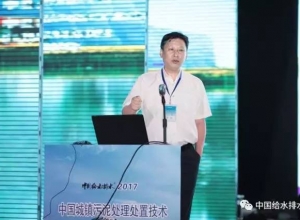

Professor Wang Kaijun, School of Environment, Tsinghua University: Upgrading and Application of Clean Sludge Incineration Technology
Article by Liu Qiulin, Chang Fengmin
Authors' affiliation: School of Environment, Tsinghua University
1. Is sludge incineration a devil or an angel?
In recent years, as one of the mainstream technologies, sludge incineration has been bearing the heavy responsibility of sludge treatment both at home and abroad. Developed countries such as Japan, the United States, and some EU countries all regard incineration as one of the mainstream technologies for sludge disposal, and it has been widely applied. However, in China, sludge incineration has always been questioned and misunderstood by the public. Why does a technology that is scientifically clear and maturely applied internationally face such an awkward situation in China? Why has sludge incineration been "demonized"?
1
Sludge drying and incineration process is seriously misread by Chinese people
In general, the misunderstandings of Chinese people towards sludge drying and incineration are mainly reflected in the following three aspects. First, it is believed that sludge drying and incineration is a high-energy-consuming process. Internationally, sludge incineration can achieve energy self-sufficiency, and in terms of energy consumption per ton of sludge, the sludge incineration process (~100kW/t) is comparable to the composting process (>100kW/t). In addition, composting requires additional energy for storage and transportation, while incineration can achieve complete treatment and disposal; Second, it is believed that sludge incineration is a high-carbon-emission process. Some people say that sludge incineration produces a large amount of greenhouse gases, which is also incorrect, because the carbon in sludge is a neutral carbon source, like burning straw, and does not increase greenhouse gases in the atmosphere; Third, it is believed that the characteristics of sludge incineration are the same as those of garbage, both being sources of dioxin emissions. In fact, dioxins emitted by sludge are far lower than those emitted by garbage. This part has been elaborated in detail before, and will not be analyzed in detail here.
2
Sludge drying and incineration is an established technical route in China
In terms of policy, the Chinese government has always supported the drying and incineration treatment of sludge. Since 2009, national ministries including the Ministry of Environmental Protection, the Ministry of Housing and Urban-Rural Development, and the Ministry of Science and Technology have successively issued policies, guidelines, and standards related to sludge treatment and disposal, such as the "Technical Policy for Sludge Treatment, Disposal, and Pollution Prevention", the "Best Available Technology Guide for Pollution Prevention in Sludge Treatment and Disposal", and the "Technical Specification for Sludge Treatment and Disposal of Urban Sewage Treatment Plants", which clarified the positioning and application conditions of sludge drying and incineration technology in China. Among them, the "Technical Policy for Sludge Treatment, Disposal, and Pollution Prevention" (2009) explicitly stated that sludge incineration can be adopted in economically developed large and medium-sized cities, encouraging co-construction of sludge incineration plants with waste incineration plants. The promulgation of this technical policy facilitated the construction of sludge drying and incineration projects. According to incomplete statistics, nearly 40 sludge drying and incineration projects have been completed, and nearly 30 are mainly under construction. The "Best Available Technology Guide for Pollution Prevention in Sludge Treatment and Disposal" (2010), issued by the Ministry of Environmental Protection, determined two best available technologies for sludge disposal - land use and sludge drying and incineration. The document also specified emission limits for separate incineration, co-incineration, and mixed burning, as well as pollution control strategies and technical-economic applicability in relevant processes. The "Technical Guide for Sludge Treatment and Disposal of Urban Sewage Treatment Plants" (2011) provided the priority order of different technological applications. For example, sludge after anaerobic digestion is preferred for land use; when land use conditions are not available, incineration and building material utilization can be adopted.
In summary, drying and incineration technology is a feasible technology specified within the scope of policies and standards, and is one of the mainstream technologies for sludge treatment and disposal in China.
3
Sludge drying and incineration technology is one of the mainstream sludge treatment technologies internationally
In the United States, as one of the three major sludge disposal technologies, land application, incineration, and composting account for 61%, 22%, and 17% respectively. The U.S. has enacted federal codes that continuously upgrade the requirements for sludge incineration. In 2011, the U.S. enacted the 40 Federal Regulations, which set different indicator requirements for PM, HCl, dioxins/furans, Hg, NOx, SO2, Cd, Pb, and CO for fluidized bed and multiple hearth incinerators. In Japan, sludge incineration has always been the dominant process for sludge treatment. In the 1960s, Japan began sludge incineration technology, mainly in Kawasaki, Ichinomiya, Nagoya, Tokyo, and other places, and subsequently, fluidized bed incinerators became the mainstream process. After the 1990s, Japan adopted sludge melting furnaces, fuel conversion (carbonization, co-incineration with power plants), and use as cement raw materials, among others. Sludge incineration is also one of the mainstream technologies in the European Union. Since Germany took the lead in proposing and operating the first sludge incineration plant in Europe in 1962, sludge incineration has been increasing in the United Kingdom, France, Luxembourg, Denmark, Germany, Austria, the Netherlands, and other countries, with the proportion exceeding 20% in all of them. In particular, in the Netherlands, Austria, and Germany, the proportion of sludge incineration has reached 40% or even higher.
II. A Decade of Sharpening: Self-Developed Sludge Incineration Technology
Peter Drucker once said, "For systematic innovation, enterprises need to open their skylights every 6 to 12 months and look at the outside world." Only independent innovation can lead to rapid development, but in our country, many people do not accept independent innovation. Currently, sludge incineration is at a turning point where it is undergoing upgrade, transformation, and rebirth. Overall, the evolution of sludge treatment processes from ocean disposal to natural drying, anaerobic digestion, dewatering and composting, and then to drying and incineration shows that sludge disposal has gone from "low-level" to "high-level" evolution. It can be seen that Japan, due to limited land resources, relies mainly on incineration for resource utilization and is gradually shifting towards cleaner pyrolysis and carbonization methods. In our country, however, landfill is still the main method currently, but newly constructed resource recovery facilities mainly use incineration and land application. Especially in the Yangtze River Delta, Pearl River Delta, and Beijing-Tianjin-Hebei regions, where population is dense and land resources are scarce, sludge incineration becoming the mainstream technology is also a natural choice in this development process.
In sludge incineration, we have conducted ten years of exploration and practice, and through independent innovation, upgraded the sludge drying and incineration process, developing a sludge spray drying and incineration process with investment and operating costs significantly lower than imported technologies. The upgrade and optimization of spray drying technology mainly focus on four aspects: dust removal, deodorization, white plume elimination, and equipment standardization and serialization. In terms of dust removal, breaking away from the traditional box-type bag filter mode, we developed a high-efficiency cylindrical bag filter, and through optimization and upgrade of internal structure, material, and air inlet method, the dust emission is reduced to less than 10 mg/Nm3. In terms of deodorization, UV and ozone treatment systems are installed in the tail gas system. Through the oxidation effect of UV, ozone, and the highly oxidative particles generated by their synergy, nitrogen oxides, sulfides, and other organic gases in the tail gas are removed, achieving an odor reduction rate of over 97%. In terms of white plume elimination and defogging, the tail gas is cooled by a plate heat exchanger, condensing a large amount of water and releasing substantial heat energy, which heats the ambient dry air; this is then mixed with the cooled and dehumidified flue gas, thereby lowering the dew point temperature of the exhausted flue gas, achieving the goal of reducing white smoke. Meanwhile, in terms of equipment serialization and standardization, a 500 t/d demonstration project was established under the water special project, and based on the demonstration project and operating experience, serialized products of 100, 200, 300, and 600 t/d were developed. Additionally, spray drying has been successfully extended to the hazardous waste field, such as the disposal of concentrated hazardous waste liquid and the co-disposal of hazardous waste concentrate with sludge, reducing sludge treatment costs. Currently, sludge spray drying technology has been widely applied nationwide. According to statistics, more than ten large-scale sludge spray drying-incineration technology application projects have been established across the country, with a total sludge treatment capacity exceeding 5000 t/d (at 80% moisture content). Among them, the largest single spray drying unit has a scale of 1200 t/d, operating for over seven years, making it the most widely applied incineration technology by a single company in China.


III. Keeping pace with the times, mastering the third-generation pyrolysis treatment technology
Pyrolysis gasification is considered the third-generation treatment technology for solid waste, and it is also a clean incineration technology. The reasons are mainly reflected in the following aspects.

1
Clean characteristics of the pyrolysis gasification process
Small amount of flue gas emitted. According to emission standards, the excess air coefficient for solid (coal) combustion is 1.8, for oil or gas combustion it is 1.2. The flue gas volume produced by combusting the gas generated from pyrolysis is only 1/2 to 2/3 of that from direct combustion of solid waste, reducing the scale and operating costs of flue gas purification equipment.
Low atmospheric pollutant emissions. The gas produced from solid waste (sludge) pyrolysis gasification is used as fuel, emitting pollutants such as soot, SO2, NOx, and heavy metals, which are more than 1/2 less than direct combustion of solid waste;
Suppress or decompose dioxins. The oxygen-free environment in the solid waste (sludge) pyrolysis zone can inhibit the synthesis of dioxins, and the combustible gas combustion zone has no metal catalytic medium and high temperature (>850 ℃) to suppress generation or decompose dioxins present in raw materials;
Reduce greenhouse gas emissions, converting biomass carbon into carbon in biochar, where 50% of the carbon can be sequestered.
2
Research history of sludge pyrolysis
Since 2008, we have set up a dedicated team to continuously research and explore pyrolysis gasification. Over the past decade, our team has made many fruitful explorations and attempts in both fundamental research and demonstration projects along the two technical routes of internal heating and external heating, and has scaled up the demonstration projects to 20-50 tons/day.

IV. Major Equipment: Pyrolysis Technology is a Key Instrument in Solid Waste Disposal
Pyrolysis technology, as a major equipment technology, has been widely applied in various fields and has become a key tool for solid waste disposal. Besides sludge pyrolysis, pyrolysis treatment is increasingly being used in waste treatment, biomass, hazardous waste thermal treatment, among others. For example, pyrolysis gasification has been extended to the disposal of hazardous waste such as oily sludge, chromium-containing sludge, kitchen waste, and leather scraps; it is also used for biochar preparation from biomass like rice husks and corn stalks, clean energy utilization, and activated carbon regeneration.
Note: Professor Wang Kaijun also further introduced some engineering cases where his team utilized pyrolysis technology in cross-industry fields.

Application of pyrolysis gasification in the harmless treatment of oilfield oily sludge.In China, the problem of waste oil from oilfields has not been effectively solved. For this reason, we established a joint research center with a company in Xi'an, specifically dedicated to waste oil pyrolysis technology research. As you can see, after pyrolysis treatment at the pilot site, the waste oil can fully meet soil requirements. Meanwhile, a 20-ton/day mobile oily sludge pyrolysis integrated equipment is about to be assembled and completed.

Application of pyrolysis gasification in the zero-discharge process of high-salt and high-concentration wastewater.Through drying-pyrolysis-gasification, granular activated carbon is regenerated and recycled, solving the hazardous waste disposal problem of spent activated carbon. At the same time, the organic matter in the wastewater adsorbed by activated carbon is pyrolyzed and gasified into syngas, converting the organic matter in the waste liquid into clean combustible gas, saving energy and reducing consumption.

Application of pyrolysis gasification in the field of food waste. The "Twelfth Five-Year" National Science and Technology Support Program proposed the research and development of regional joint disposal of food waste and biogas industrialization technology, business model construction, and engineering demonstration.
The "one increase and three reductions" of pyrolysis treatment of light fractions sorted from food waste means that by integrating the pyrolysis system for organic matter, it increases the net biogas production of the system while reducing the self-consumption of biogas, loss of organic matter, solid waste treatment volume, and oil loss. Pyrolysis treatment can reduce disposal costs by 2,000 yuan and reduce biogas usage by 3,000 cubic meters per day. In addition, we are also conducting another study, which uses pyrolysis technology to pyrolyze the residue after biological treatment of food waste, converting syngas into biogas, thereby increasing biogas production.

Application of pyrolysis gasification in agricultural biomass treatment. Using township biomass as raw material, through biomass pyrolysis, combined with the co-production of heat, electricity, gas, and charcoal, it produces combustible gas or heat, which is further converted into electricity. The produced biochar can be used as soil amendment, clean fuel, or after further activation as an adsorbent for sewage, forming a regional green circular ecological park. In terms of agricultural biomass such as corn straw and rice husk, we have made many years of attempts and applications.
V. The trend is clear, and the prospects of pyrolysis technology are limitless
In short, pyrolysis technology holds great potential in various fields of solid waste treatment. In the future, whoever masters pyrolysis technology will gain the leading edge and a say in the field. The shift from non-renewable carbon-based resources to renewable bio-based resources has become an international trend. The U.S. Energy Information Administration lists pyrolysis as a key technology for third-generation biomass energy utilization, and countries such as Japan, Australia, and Germany have also conducted corresponding research in this area. In Germany, a waste pyrolysis experimental project with a capacity of 100 tons has been built. In terms of zero emissions, pyrolysis technology will also become the next trend. China applies pyrolysis technology to the treatment of biological fermentation bacterial residues, with broad prospects in hazardous waste treatment. As a systematic solution for townships, pyrolysis technology will also prove its worth in agricultural waste treatment.
"People must respect themselves before being respected by others, and the industry must first respect itself before being respected by the public." As an effective technology, we hope that sludge incineration technology can receive more attention and recognition in China. We must follow the correct technical path and carry forward this major equipment based on pyrolysis technology!

0 Comments
Post comment