

| 6499 Views |839 Likes
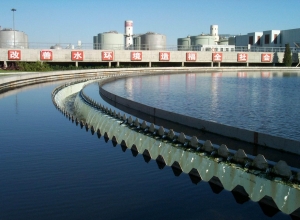
Topics about water pollution are constantly being raised, especially groundwater pollution. In Hangzhou, Wenzhou and other places in Zhejiang, farmers or entrepreneurs have funded environmental protection bureau chiefs to swim in rivers, in order to draw attention to the severity of water pollution. Although the environmental protection bureau chiefs have chosen to remain silent or refuse, the awakening of public environmental awareness and the degree of concern about water pollution have reached unprecedented levels.
The 2016-2021 China Sewage Treatment Industry Market Demand and Investment Consulting Report shows that sewage treatment is widely applied in construction, agriculture, transportation, energy, petrochemicals, environmental protection, urban landscapes, medical, catering and other fields, and is increasingly entering the daily lives of ordinary people.
I. Industrial Wastewater Treatment Market
Rising costs for industrial wastewater treatment and compliance requirements will drive continuous market expansion, with coal chemical, oily sewage, printing and dyeing, pharmaceutical, and food sectors being key investment points.
The current state of industrial wastewater treatment urgently needs improvement. In 2012, China's industrial wastewater discharge reached 22.16 billion tons, mainly concentrated in papermaking and printing, chemical, textile, and steel industries. Industrial wastewater has complex composition, severe pollution, high treatment costs, and low reuse rates. Facing these problems, at the policy level, policies such as the "Water Pollution Prevention and Control Action Plan" will force industrial wastewater treatment to become a focus of the water treatment industry.
From the perspective of wastewater treatment compliance rate, there is room for improvement in the sewage treatment rate of coking, papermaking, petrochemical industries, and small steel plants. The demand for compliance will also expand the industrial wastewater treatment market, among which coal chemical, oily wastewater, printing and dyeing, pharmaceutical, food and other fields are investment highlights. The increase in industrial wastewater treatment costs will drive the continuous expansion of the market size.
In terms of market expectations, in the past few years, the industrial wastewater treatment fee in major cities in China has increased from 0.66 yuan/ton to 1.17 yuan/ton, and it is expected to rise to 1.65 yuan/ton by 2015, with the industrial wastewater treatment market size reaching 48.2 billion yuan.
In terms of industrial wastewater, China's industrial wastewater discharge will continue to increase year by year in the future, and it is expected to reach 30.56 billion tons by 2020. The total investment in the industrial wastewater field during the "12th Five-Year Plan" period will reach 832.4 billion yuan, and will further increase to 972.2 billion yuan during the "13th Five-Year Plan" period. Because industrial wastewater covers a wide range of industries, and there are differences in treatment technology among sub-fields, the monopoly barriers in each sub-field are relatively high. The industry is more optimistic about the treatment of high-difficulty and high-risk wastewater such as coal chemical and petrochemical industrial wastewater. In terms of market segments, water treatment in the coal chemical industry may become a new blue ocean.
In the industrial wastewater field, oily wastewater treatment is very attractive to investors. The main reason is the large volume of oily wastewater treatment. At the same time, there are still technical difficulties in oily wastewater treatment, and some technical links are hard to break through. For example, polymer removal, and personalized solutions for wastewater treatment under different geological conditions, all have great technical difficulties. Sometimes oil wells 500 meters apart can have very different impurities and minerals in the water. This places high technical requirements on water treatment companies.
2. Chemical wastewater treatment market
In 2013, the total wastewater discharge in China was 69.54 billion tons, of which the chemical industry discharged 9.3 billion tons, with a treatment volume of 4.1 billion tons, resulting in a treatment ratio of only 44%.
Following the "Air Pollution Prevention and Control Action Plan", the State Council officially released the "Water Pollution Prevention and Control Action Plan" on April 16, 2015. The standards of the "Water Ten Plan" are very strict. It emphasizes mandatory measures for enterprises to comply with laws, and also focuses on the application of market-based mechanisms for water pollution prevention, including PPP (Public-Private Partnership). The clear governance goal is to eliminate劣V类 water by 2017, earlier than the industry's expected 2020.
Industrial wastewater is complex in composition, more difficult to treat than urban sewage, and has high technical barriers. There is an urgent need for specialized companies with leading technology. Pollutants in industrial wastewater are complex and typically include one or more of the following: acidic, alkaline, cyanide-containing, phenol-containing, aldehyde-containing, oil-containing, sulfur-containing, phosphorus-containing, organic matter, radioactive substances, etc. The pollutants vary greatly among different industries. For new investment, depending on the project and process, the investment ranges from 0.005 to 1.5 billion yuan per (10,000 tons/day). In terms of operation, taking the Yuheng project of Wanbonda (300055) as an example, the operation cost per ton of wastewater is 5.9 yuan. Industrial wastewater treatment typically requires a combination of one or several processes to adequately treat the wastewater. The industry has high technical barriers and urgently needs specialized companies with leading technology.
The chemical wastewater market space of about 200 billion yuan per year is yet to be opened. China's urban sewage treatment ratio is relatively high, future discharge growth is slow, and there is little room to increase the treatment ratio. In contrast, chemical wastewater treatment ratio is low, future discharge growth is fast, and there is significant room for increasing the treatment ratio. Combining existing and incremental markets, the annual market space for chemical wastewater in China is 199.39 billion yuan, nearly three times that of urban sewage.
III. Sludge Disposal Market
The treatment and disposal of urban domestic sewage sludge is another focus worth attention. It is expected that in the next 5 years, the investment scale for sludge treatment and disposal in China is expected to reach around 36 billion yuan. After 2018, the operating market space for sludge treatment and disposal will exceed 9.5 billion yuan per year.
However, in sharp contrast to the optimistic market expectations, the current situation of sludge treatment and disposal in China is worrisome. 31% of sludge is disposed of by landfilling. These sludges are not stabilized and easily cause secondary pollution to the environment. Another 3.45% is mixed with garbage for landfill, and these sludges actually fall into the landfill category. In addition, 44.83% of sludge is used for agricultural use, and 3.45% is incinerated.

0 Comments
Post comment